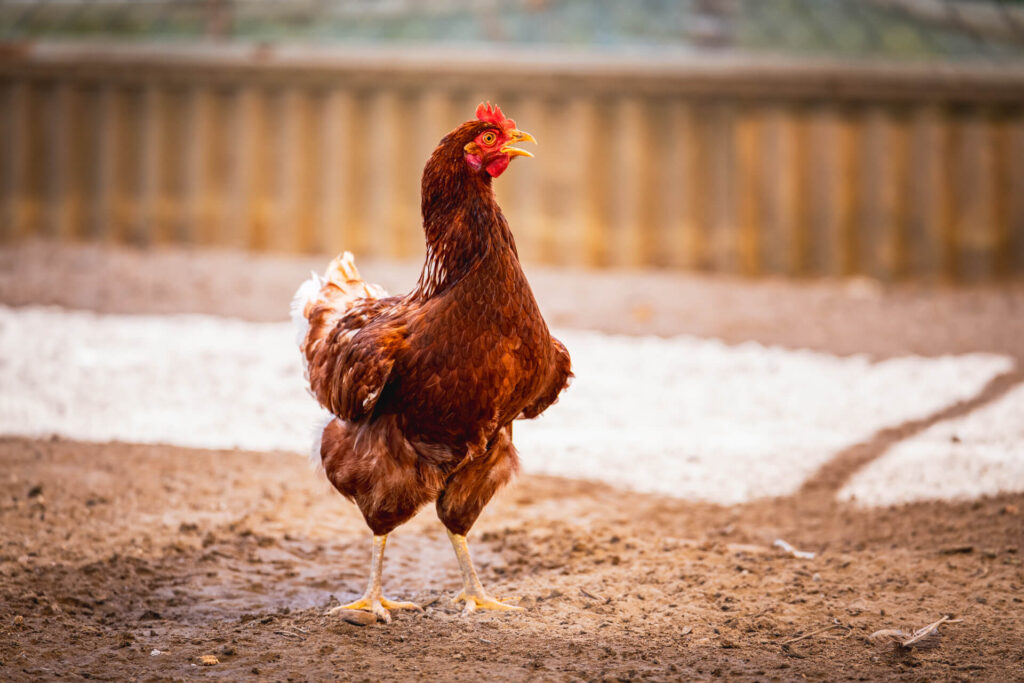



It took four months of hard work to build a new henhouse, but no one can take away the title of ‘5-star henhouse’!
Obviously, I didn’t spend four months working on the new henhouse every day, because I also had to think about all the crops!
The work was hard, but the result is more than satisfactory. Together with my husband, we have built a safe place for the guests of the henhouse, sheltered from any kind of animal that could harm them.
The term “ henhouse ” usually refers to both the place where hens sleep and the place where they scratch around. However, to explain things better, in this article I will only refer to the henhouse as the place where they mainly sleep. My chicken coop is quite large, measuring approximately 70 square metres, and also includes other areas reserved for the infirmary, acclimatisation and nesting. The other part adjacent to the chicken coop is a 400 square metre area where the animals can scratch around.
Hens need sufficient space to scratch around, and I have reserved 400 square metres for mine, completely fenced in with 170 cm high wire mesh.
I have planted some fruit trees in this space so that I can eat something tasty and natural, while they will benefit from the shade during the summer.
I have also placed 15 kg hopper feeders in the area where they can scratch around. Nowadays, there are feeders to suit all tastes, and mine are simply bell-shaped containers that gradually release food to the hens. This way, there is no waste because the hens eat their ration and every time the container releases the food gradually.
As for the drinking troughs, I made a different choice than usual. In fact, I decided to place them inside the chicken coop where they usually sleep because it is the shadiest place; this way, even though I change the water regularly, it will always be nice and cool.
An important space within the henhouse is undoubtedly reserved for the place where the hens sleep. Hens do not like to sleep on the ground, unless they are confined to a small space or there are no perches.
In fact, it is necessary to install round poles or, better still, canes that they can cling to with their paws. This makes them feel much safer and allows them to sleep peacefully.
I have positioned 6 bamboo poles, each 6 metres long, are secured with screws to a structure to keep them stable when the hens perch on them. The height varies from the first perch located at 30 cm from the ground to the highest point at approximately 1 metre above the ground.
I built the egg-laying area raised off the ground to allow the hens to lay their eggs in peace while the others scratch around. It is installed 70 cm above the ground and the hens reach it via two ladders that they can easily climb with the help of wooden rungs. The nest inside is divided into several “laying stations” so that several hens can crouch down at the same time.
Each small station has straw and sawdust, allowing the hens to crouch down and lay in total comfort, while also allowing me to collect clean eggs every time.
For brooding, I have created a space of about 5 square metres where the hens will first brood and then raise the chicks during their first weeks of life, sheltered from all the chaos of the henhouse.
Here I have placed two bamboo poles at a height of 1.5 metres with wooden boxes containing straw on top. I have placed them so high because the hens I have are able to fly higher. Once the brooding period is over (21 days), I will place the boxes on the ground, allowing the chicks and hens to scratch around in their space.
This is a necessary part of a chicken coop because, unfortunately, fights between roosters and other birds are common. Often, a hen that is going through a difficult period and feels uncomfortable with the others, or a rooster that has been badly injured by others and is bleeding, needs to be isolated for a period of time. Here, a bowl for food and one for water are placed. What better place to spend a quiet convalescence than an infirmary in the henhouse!
The infirmary is completely fenced off and inaccessible from the rest of the henhouse.
Outside the chicken coop, I have created an area that will remain sheltered from the rain so that the animals can take sand baths whenever they want. These are necessary to clean their plumage and remove mites and parasites. Poultry in general require this treatment and do not mind doing it for long periods of time; in fact, for them it is like taking a bath.
I am fortunate because my soil is sandy, but otherwise it is sufficient to create a small space where you can put sand and they will be satisfied.
My name is Francesca and I am 33 years old. I like to share my life in the countryside in a simple and spontaneous way, just as this adventure began.


Iscriviti alla nostra newsletter e ottieni subito un coupon di sconto del 10% da utilizzare sul tuo primo ordine come regalo di benvenuto!