

Good morning from the countryside!
Today, gardening has become a passion for many, and lots of people decide to do it either in the field, on their balcony or in their garden. The important thing is to sow seeds and then harvest something! It gives us immense satisfaction to be able to care for a plant from seed to harvest. I would say that vegetables taste different when we eat them, don’t they?
Well, that’s all well and good, but let’s not ruin everything in our rush to sow seeds; in fact, it’s not true that sowing earlier means harvesting earlier; on the contrary, often the opposite result is achieved.
Choosing when and what to sow may seem silly and obvious, but I assure you that it is the basis for productive cultivation. Vegetables are classified into families that have different climatic requirements, especially in terms of temperature. Tomatoes hate the cold but do not die at temperatures around 5 degrees, although their growth and therefore their yield are compromised.
Zucchini die at temperatures below 2 degrees, and goodbye harvest; green beans, like beans, only grow if they experience mild night-time temperatures, otherwise they stop growing!
All this is to help you understand that the sowing period is the key to getting off to a good start.
Hence the need to carefully study the sowing period in relation to when the plants will be transplanted. Let me explain: ask yourself this question:
What will the temperatures be like in 4-5 weeks when the seedlings are ready for transplanting?
If you sow a tomato seed in mid-January, you will be ready to transplant it at the end of February; fine, but are you sure the temperatures will be suitable at that time?
I cannot tell you in this blog when you should sow your vegetables because I would need to know your climate, your area and your exposure; all things that you know and can assess very well. However, I will try to help you with some general guidelines to help you understand which vegetables you can start sowing and when.
When it comes to sowing, there are two ways to do it: in seedbeds or directly in the ground. In cold periods such as the first months of the year, it is advisable to start sowing vegetables in seedbeds and then transplant them after about 4-5 weeks into the ground or onto the terrace.
We are now accustomed to sowing certain vegetables such as tomatoes, aubergines, peppers, courgettes, cucumbers, pumpkins, cabbages, fennel and others in seedbeds, and in my opinion this is an excellent method.
As I have already mentioned, it makes little sense to set up a seedbed, spend money on lights, soil, containers and perhaps even heat it to speed up germination if you cannot then transplant the seedlings because the outside temperatures do not allow it, but it is up to you to decide.
Sowing in seedbeds involves the use of seed trays or pots; you can even sow seeds in egg cartons. The location must be at least as well lit as outside (preferably a few hours more than daylight hours) with warm temperatures of 20 degrees or above and never below 12/13 degrees if we want proper germination and healthy growth of the seedlings.
There are also vegetables that grow better when sown directly in the ground, such as broad beans, peas, onions and even beans, but there is nothing to stop you from growing them in a seedbed.
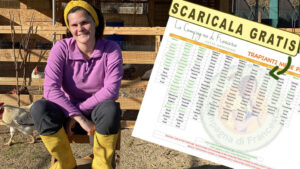
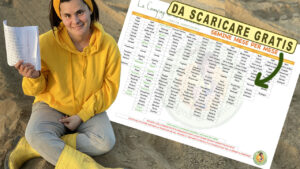
In the table I carefully prepared, I wrote:
As you can see, the division of the months highlights those in the winter period (December and January) with few vegetables to sow, while from February onwards there is a burst of sowing and planning work.
I have tried to include the most commonly grown vegetables, but you may not find everything you are looking for. I apologise for this, but please understand that it is the vegetable family that is important to consider.
Example
If you want to sow chilli peppers (Solanaceae family), I haven’t included them in the table, but tomatoes and aubergines belong to the same family, so you can follow the usual sowing period.
Always remember before sowing that after 4-6 weeks you will need to transplant the seedlings into the field! So consider the temperatures you are likely to have during that period!
For more information, watch my videos on YouTube and follow me on Instagram!
See you next time!
Fill in the form and you will receive a link to download the file.
My name is Francesca and I am 33 years old. I like to share my life in the countryside in a simple and spontaneous way, just as this adventure began.

Iscriviti alla nostra newsletter e ottieni subito un coupon di sconto del 10% da utilizzare sul tuo primo ordine come regalo di benvenuto!