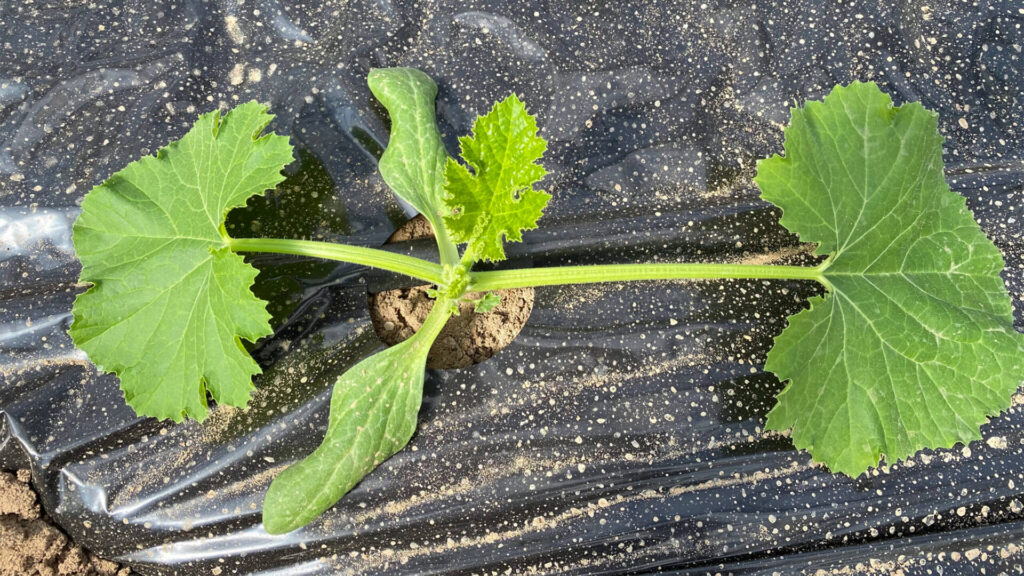



Every year at the end of winter, we are eager to start planting and sowing all kinds of vegetables for our garden, visiting garden centres and buying the first seedlings! Looking at the calendar, we see that it is February, even though the days are warm and sunny and the television is talking about spring ahead of time.
‘Oh well, I won’t be tempted. I’ll wait until March, which is definitely the ideal month!’
And I say, ‘Are you really sure?’
Unfortunately or fortunately, farmers do not rely entirely on the calendar, but rather take weather conditions into account. March and April can sometimes be cold, so be sure to keep an eye on the weather forecast!
However, this does not apply to every region of Italy. In fact, in March, Sicily will certainly be warmer than Veneto, so my advice is to consider which region you are in and the expected weather conditions.
Every year we are fooled by a few early signs of spring, we plant our vegetable garden, and then the late frost ruins everything.
One of the plants most sensitive to cold weather is the courgette, but it is also the one we want to have in our vegetable garden right away.
I’m not here to teach you anything, but I want to help you identify the best time to start sowing and transplanting courgettes.
Let me start by saying that this plant absolutely needs a warm climate, so if the daytime temperature is spring-like but you know that it drops below 5 degrees at night, wait a little longer before sowing or even transplanting.
A sheet of TNT (non-woven fabric) can certainly help a lot, so always keep it handy for the night, but if the day is cool, don’t worry because the light still filters through and the plant benefits from two or three degrees.
I recommend sowing courgettes in seedbeds in small cells or directly in the ground because it is easy to do and germination is quick.
A plant that grows directly from a seed sown in the ground without undergoing the stress of transplanting is much more resistant than others (however, this does not apply to all vegetables).
The varieties I recommend for good production are:
All three varieties can also be grown as saplings to save space in the garden.
Let’s move on to some practical information now.
To sow courgettes outdoors:
In central and southern Italy from 1 April onwards;
In central and northern Italy from 15 April onwards.
However, if you have access to a small seedbed or even a greenhouse, large or small, the dates are brought forward:
In central and southern Italy from 15 March onwards;
In central and northern Italy from 1 April onwards.
When it comes to transplanting, whether it’s a seedling you’ve bought or one you’ve grown in a seedbed and now need to plant in the ground, the dates are as follows:
In central and southern Italy from April onwards;
In central and northern Italy from May onwards.
I hope I have been as helpful as possible in giving you these tips, which I assure you are indispensable. Don’t rush to sow early, as you will definitely be in time to harvest the courgettes.
Remember also that if the plant is sown at the right time, avoiding thermal stress as much as possible, it will produce one courgette per day! I even managed to harvest one courgette per day for 50 days!
One last tip I would like to point out to save you wasting time if the seedlings do not sprout after sowing is this: courgettes should sprout within 4-5 days after sowing at the most. If you do not see anything, try digging up the seed and see if it has rotted for some reason. Remember to keep the soil moist but not too wet.
Now you’re ready to sow your courgettes and enjoy a bountiful harvest!
My name is Francesca and I am 33 years old. I like to share my life in the countryside in a simple and spontaneous way, just as this adventure began.


Iscriviti alla nostra newsletter e ottieni subito un coupon di sconto del 10% da utilizzare sul tuo primo ordine come regalo di benvenuto!